

There was a lot to celebrate in April: the community shipped GPU renderers, FFmpeg bindings, raylib wrappers, BLAS routines, and a 2D graphics API, just to name a few. The team connected with tons of developers at AMD AI DevDay and our joint meetup with AMD, two new Modular offices opened on two different continents, and Gemma 4 launched with same-day support on NVIDIA and AMD. Here’s the April roundup.
Community Innovations
From GPU rendering to bioinformatics tooling to game dev bindings, here's what developers built with MAX and Mojo this month:
- From OpenCL to Mojo, Part 2: Integrating into an Existing Project: Max Chistokletov is back with a follow-up to his series from March, where he replaced Darktable's OpenCL image processing kernels with Mojo GPU kernels. Part 2 covers the integration work required to wire those kernels into a production codebase, which turns out to be harder than writing the kernel itself.
- Mojo for Robotics: Porting GPU Navigation Kernels: A project exploring what it takes to port Mojo GPU navigation kernels to Jetson and AMD Strix Halo, two hardware targets with very different characteristics. The discussion covers cross-platform tradeoffs and the cost of portability. Check out the scaffolding repo on GitHub.
- MAV: FFmpeg Bindings for Mojo: MAV (Mojo Audio Video) brings FFmpeg bindings to Mojo, opening up video and audio processing workflows to the language. The project was presented at the April community meeting. Get started with the bindings on GitHub.
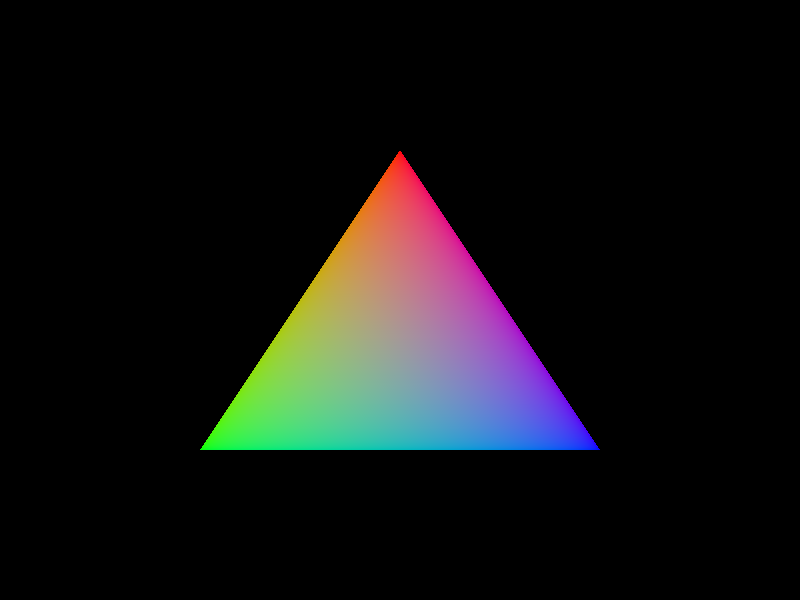
- Wgpu-mojo: wgpu-native Bindings: Hundo1018 built bindings that let Mojo programs invoke wgpu-native directly for GPU rendering. The initial demo renders a triangle, but the path toward Mojo-native graphics tooling is now open. Find the project on GitHub.
- MojoFlow: AI-Native Full-Stack Framework: An open-source, production-oriented framework for Mojo covering server, client, and AI pipeline components. Check out the code on GitHub.
- Cairo-mojo: 2D Rendering API for Mojo: Cairo-mojo wraps Cairo graphics with a high-level Mojo API. Practical 2D rendering in Mojo without leaving the language. Explore the project on GitHub.

- mojoBLAS v0.1.0: Pure Mojo BLAS Implementation: shivasankarka shipped a v0.1.0 of mojoBLAS, a pure Mojo implementation of BLAS routines, the linear algebra primitives underlying most numerical computing. Find the code on GitHub.
- HDF5 Bindings v0.2.0: shivasankarka also updated Mojo's HDF5 bindings to work with Mojo 26.2. HDF5 is the standard data format for scientific computing and large ML datasets. Explore the code on GitHub.
- Mojo-bindgen: Automatic C Binding Generation: MoSafi2 built a tool that generates Mojo bindings from C headers using libclang, similar to rust-bindgen but targeting Mojo. This tooling makes the C ecosystem accessible without manual wrapping work. Dig into the code on GitHub.
- Mojo-raylib: Complete raylib v6 Bindings: Inspired by Mr. Azozin's recent video, kivicode published fully code-generated bindings for raylib v6 in Mojo, covering the full popular 2D/3D game development library. Find the project on GitHub.
- Book: Mojo By Example Updated for v0.26.3: "Mojo By Example" has been updated to track the latest stable release, making it useful again for developers picking up the language.
💡 Building something with MAX or Mojo? Share it in the Community Showcase and we may feature it here.
Modular Making Waves
- Gemma 4 launched day zero on Modular Cloud. When Google DeepMind released Gemma 4, Modular was ready. MAX-powered endpoints for all Gemma 4 variants (including the 31B dense model and the 26B A4B MoE) went live the same day, with 15% higher throughput than vLLM on NVIDIA B200 at no accuracy cost. Read the full story on the Modular blog.
- New blog series: Software Pipelining for GPU Kernels. Part 1 covers the core challenge of overlapping memory transfers with compute to keep GPU hardware busy. If you've been following the Structured Mojo Kernels series, this is a good next read. Dig in with Part 1.
- Structured Mojo Kernels, Part 4: Portability and the Road Ahead. The final post in the series covers how Modular's kernel abstractions handle cross-hardware portability, with the same kernel code targeting NVIDIA and AMD GPUs without rewrites. Read Part 4 here.
- TileTensor, Part 1: Safer, More Efficient GPU Kernels. A new series introducing TileTensor, Modular's abstraction for structuring tensor data in GPU kernel development. The first post covers the core design and why it makes kernels both safer and faster to write. Start with Part 1.
- How Frontier Coding Agents Built a Video Diffusion Pipeline on MAX. Claude, Cursor, and Codex built a working video diffusion pipeline on MAX using Mojo AI coding skills, without any of the GPU kernel code being written directly by a human. A useful case study in what AI-assisted GPU development looks like today. Read the full post on the Modular blog.
- Inside MAX Serve: From Prompt to Response. A new video walkthrough of how MAX Serve handles the full lifecycle of an inference request, from token arrival through scheduling, batching, and GPU execution. Watch it on YouTube.
- Edinburgh and San Francisco offices are open. Modular’s new Edinburgh office sits inside the Bayes Centre, where AI research and industry teams work alongside each other. The team also opened the doors to a Jackson Square location in San Francisco. Read the office announcement.
Open Source Contributions
If you've recently had your first PR merged, message Caroline Frasca in the forum to claim your Modular swag! Check out the recently merged contributions from our amazing community members:
- alexturcea [1]
- artemiogr97 [1]
- avijaira [1]
- avitkauskas [1]
- BenWibking [1]
- bgreni [1] [2] [3] [4]
- byungchul-sqzb [1] [2] [3] [4] [5] [6]
- christoph-schlumpf [1]
- frostming [1]
- gabrieldemarmiesse [1]
- isaacuselman [1]
- jglee-sqbits [1] [2] [3] [4] [5] [6] [7] [8]
- keith [1]
- kkimmk [1] [2] [3] [4] [5] [6] [7]
- lsh [1]
- mahendrarathore1742 [1]
- mahiro21h [1]
- martinvuyk [1] [2] [3] [4] [5] [6] [7] [8] [9] [10] [11] [12] [13]
- msaelices [1] [2] [3] [4] [5] [6] [7] [8] [9] [10] [11] [12]
- owenhilyard [1] [2]
- pei0033 [1] [2] [3] [4] [5] [6] [7] [8]
- peymanbr [1]
- pierlon [1]
- prsabahrami [1] [2]
- soraros [1] [2]
Modular News & Events: Stay Connected
- AMD AI DevDay - Modular sponsored AMD AI DevDay and hosted a reception with AMD the night before the event. Chris Lattner gave a luminary talk, and the Modular team chatted with tons of enthusiastic developers and AI practitioners.


- Chris Lattner at AMD AI DevDay - On April 30, Chris Lattner took the stage at AMD's AI DevDay. He covered FLUX.2 on the AMD MI355X with Modular: 3.8x faster than torch.compile. 1024x1024 images in under 3.5 seconds, deployment container under 700MB. The event brought together AMD engineers, ecosystem partners, and AI developers for tech talks and hands-on workshops.

Chris Lattner’s luminary talk at AMD AI DevDay - Mojo Africa Meetup in Uyo, Nigeria - Community organizer Ekemini Samuel hosted a community meetup in Uyo, Nigeria, through the local Mojo Africa community.
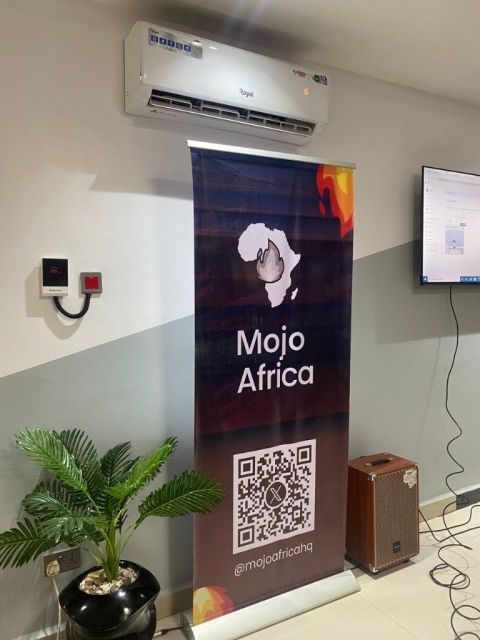
Thanks to Ekemini Samuel for the photo. - April community meeting - The April 27th meeting featured two projects: a presentation on Mojo support on Tensara, the competitive GPU programming platform, and a walkthrough of MAV, the FFmpeg bindings for Mojo audio and video. Watch the recording on YouTube.
- Mojo 1.0 is close - The path to stable Mojo 1.0 is underway. Follow the nightly release threads and the Mojo roadmap to stay up to date.
- Modular Developer Meetup: Seoul - A Modular developer meetup is coming to Seoul, South Korea. Find details and register on Luma.
- Modular Community Meeting (May) - The monthly community meeting continues in May, virtual and open to everyone. Register on Luma and add yourself to the agenda if you’d like to present a project.