Blog

Democratizing AI Compute Series
Go behind the scenes of the AI industry with Chris Lattner
Fast⚡k-means clustering in Mojo🔥: a guide to porting Python to Mojo🔥 for accelerated k-means clustering
There are several clustering algorithms, but k-means — the algorithm we're going to implement from scratch in Python and Mojo🔥 in this blog post — is one of the most popular due to its simplicity and ease of implementation.

Developer Voices: Deep Dive with Chris Lattner on Mojo
Last week, Chris Lattner sat down for an interview on the Developer Voices podcast with Kris Jenkins. It was a wide-ranging episode that explored a variety of topics, including the motivations behind creating Mojo, what it offers to both Python and non-Python programmers alike, how it is built for performance, and which performance features actually matter. This post recaps a number of highlights from the podcast, edited for clarity and brevity. You can find the full 90 minute interview on YouTube.

What’s New in Mojo 24.3: Community Contributions, Pythonic Collections and Core Language Enhancements
Mojo🔥 24.3 is now available for download and this is a very special release. This is the first major release since Mojo🔥 standard library was open sourced and it is packed with the wholesome goodness of community contributions! The enthusiasm from the Mojo community to enhance the standard library has been truly remarkable. And on behalf of the entire Mojo team, we’d like to thank you for all your feedback, discussion and, contributions to Mojo, helping shape it into a stronger and more inclusive platform for all.
Row-major vs. Column-major Matrices: A Performance Analysis in Mojo and NumPy
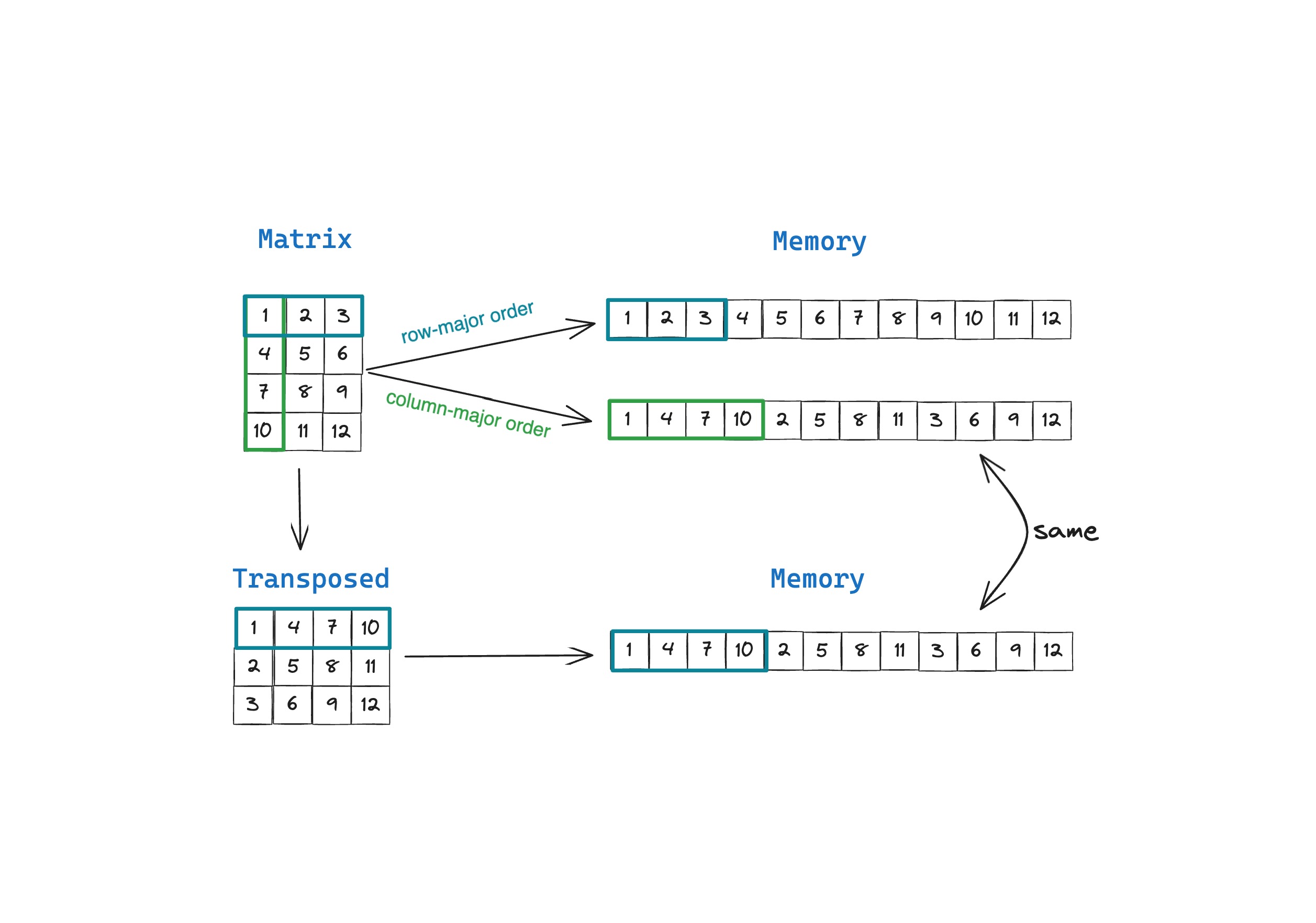
A matrix is a rectangular collection of row vectors and column vectors that defines linear transformation. A matrix however, is not implemented as a rectangular grid of numbers in computer memory, we store them as a large array of elements in contiguous memory.

What’s new in Mojo 24.2: Mojo Nightly, Enhanced Python Interop, OSS stdlib and more
This will be your example-driven guide to Mojo SDK 24.2, as part of the latest MAX release. If I had to pick a name for this release, I’d call it MAXimum⚡ Mojo🔥 Momentum 🚀 because there is so much much good stuff in this release, particularly for Python developers, adopting Mojo.

The Next Big Step in Mojo🔥 Open Source
At Modular, open source is ingrained in our DNA. We firmly believe for Mojo to reach its full potential, it must be open source. We have been progressively open-sourcing more of Mojo and parts of the MAX platform, and today we’re thrilled to announce the release of the core modules from the Mojo standard library under the Apache 2 license!

Semantic Search with MAX Engine
In the field of natural language processing (NLP), semantic search focuses on understanding the context and intent behind queries, going beyond mere keyword matching to provide more relevant and contextually appropriate results. This approach relies on advanced embedding models to convert text into high-dimensional vectors, capturing the complex semantics of language.

How to Be Confident in Your Performance Benchmarking
Mojo as a language offers three main benefits, namely the 3 P’s: Performance, Programmability and Portability. It enables users to write fast code, do so easier than many alternative languages, and allows code to be run across different CPU platforms, with GPU support on the roadmap.
Mojo🔥 ❤️ Pi 🥧: Approximating Pi with Mojo🔥 using Monte Carlo methods
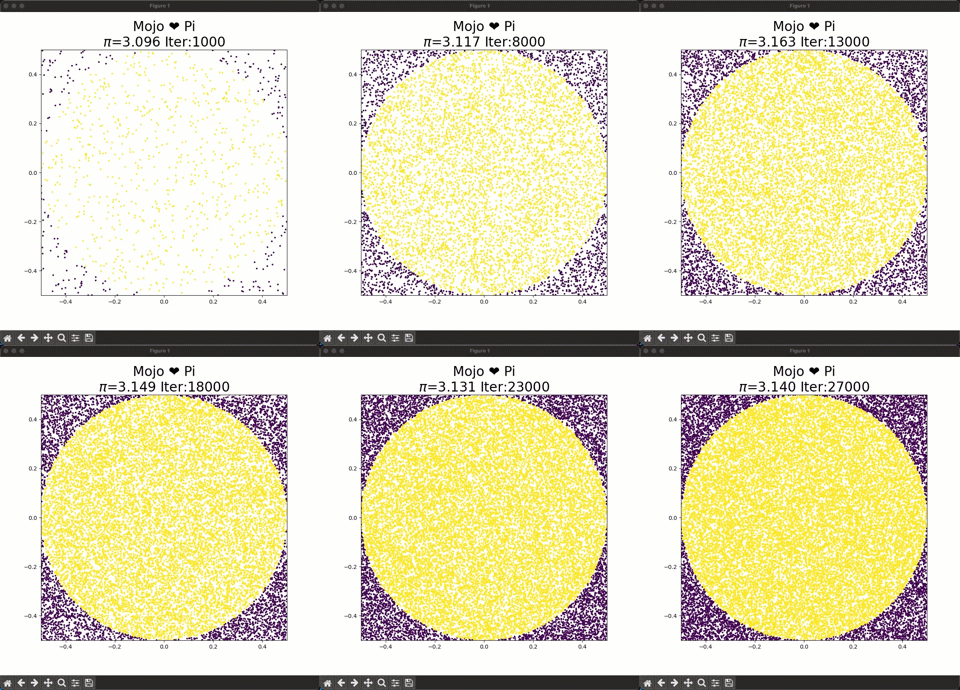
March 14th aka 3/14 or 3.14 is known as $\pi$ Day, and it honors the mathematical constant $\pi$ (pi), which represents the ratio of a circle's circumference to its diameter. On this special day, I wanted to dedicate a blog post to the beauty of mathematics, numerical methods, $\pi$, and Mojo. So join me on this journey as I implement a fast vectorized Monte Carlo approximation method of calculating $\pi$. Happy $\pi$ Day!

Evaluating MAX Engine inference accuracy on the ImageNet dataset
MAX Engine is a high-performance AI compiler and runtime designed to deliver low latency, and high-throughput inference for AI applications. We've shared how you can get started quickly with MAX in this getting started guide, and how you can deploy MAX Engine optimized models as a microservice using MAX Serving.

Democratizing Compute
Go behind the scenes of the AI industry in this blog series by Chris Lattner. Trace the evolution of AI compute, dissect its current challenges, and discover how Modular is raising the bar with the world’s most open inference stack.

Matrix Multiplication on Blackwell
Learn how to write a high-performance GPU kernel on Blackwell that offers performance competitive to that of NVIDIA's cuBLAS implementation while leveraging Mojo's special features to make the kernel as simple as possible.

Structured Mojo Kernels
Learn how Mojo simplifies GPU programming with modular kernel architecture, compile-time abstractions, and zero-cost performance across modern GPU hardware.

Software Pipelining for GPU Kernels
Explore software pipelining for GPU kernels from first principles. We formalize dependencies as a graph, solve for the optimal schedule with a constraint solver, and show how it all integrates into MAX via pure Mojo.

Why LLM Inference Needs a New Kind of Router
This series walks through why traditional HTTP routing breaks down under LLM workloads and how Modular Cloud solves it with a three-layer architecture built for cache-aware routing.

TileTensor
This series walks through how Modular built TileTensor, a Mojo tensor type that lets kernel authors express complex memory layouts precisely, safely, and efficiently.
No items found within this category
We couldn’t find anything. Try changing or resetting your filters.

Sign up today
Signup to our Cloud Platform today to get started easily.
Sign Up
Browse open models
Browse our model catalog, or deploy your own custom model
Browse models